
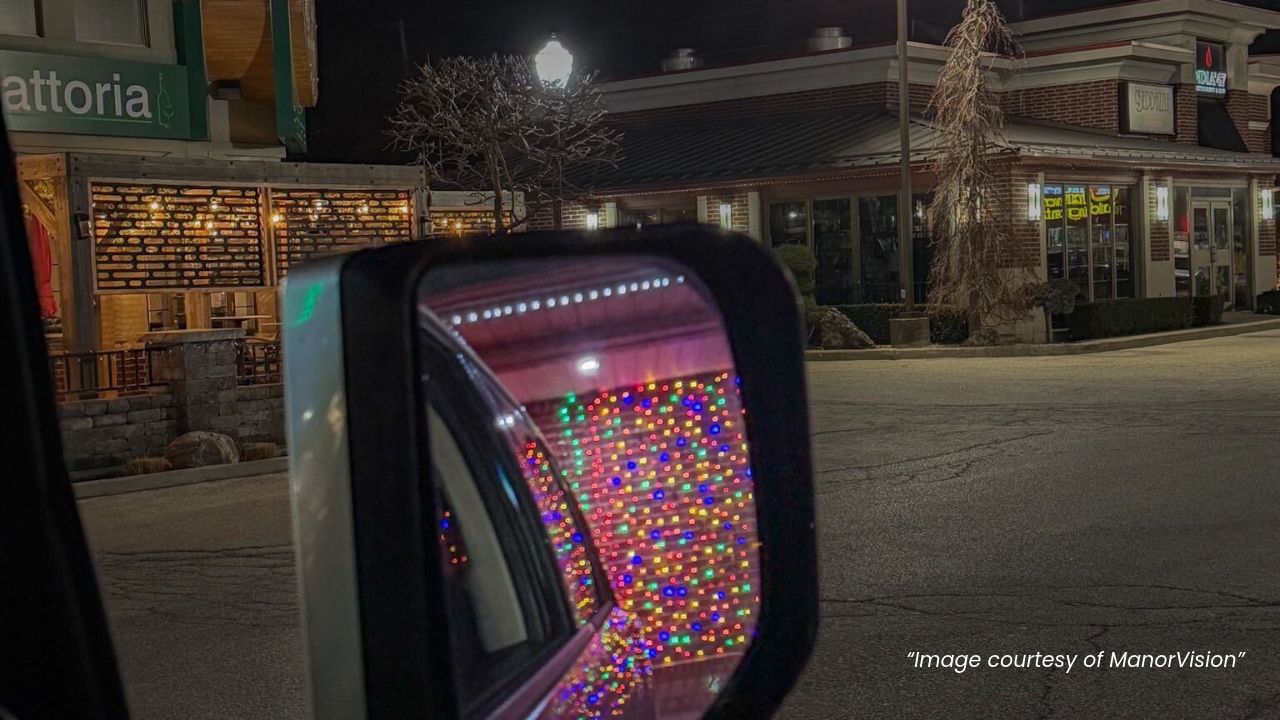
We've spent a fortune learning how to measure the customers who find us. What about the ones who never do?
I remember when an internet lead was something to get excited about.
Somebody had been looking at your inventory, found a vehicle they liked, and actually raised their hand.
Holy shit. A customer!
And for a while, it worked beautifully.
Then everybody figured it out.
Leads got more expensive. Competition got better at buying them. We discovered that the same customer could somehow become a fresh opportunity at three different dealerships.
Sometimes the lead wasn't particularly fresh by the time anybody got it.
We built entire departments to manage the process.
Internet managers. BDCs. CRMs. Automated follow-ups.
Then came increasingly sophisticated advertising platforms promising to find precisely the people we wanted, at precisely the moment they were ready to buy.
We could track almost everything.
Except, apparently, when to stop spending money.
We got really good at counting
I've watched the automotive industry develop an almost religious relationship with marketing metrics.
Cost per click. Cost per lead. Cost per appointment. Cost per sale.
And my personal favourite, the VDP.
Vehicle Detail Page views.
At some point, we started treating the number of people looking at a vehicle online as a measure of how well we were selling it.
We could buy more exposure, promote inventory, adjust pricing, and watch the numbers move.
Sometimes those numbers reflected genuine buyer interest. Sometimes they reflected how effectively we'd learned to generate the activity being measured.
Either way, somebody had a dashboard to show us.
I'm not suggesting any of this was useless.
Digital advertising transformed the car business. Dealers reached customers they never could have before. Buyers gained access to inventory and information that would have been unimaginable a generation earlier.
Enormous value was created.
There still is.
But somewhere along the way, I think we developed a blind spot.
What doesn't show up?
Imagine a dealership with a $40,000 monthly digital advertising budget.
The agency produces a report showing clicks, leads, appointments, and attributed sales.
You can calculate the return. Debate the accuracy. Question the attribution.
At least you've got something to work with.
Now imagine somebody in your market is considering a $90,000 truck.
Before visiting a dealership, they ask an AI assistant to help narrow down their options.
The assistant considers inventory, reputation, customer experiences, and whatever other information it can find.
It recommends three dealerships.
Yours isn't one of them.
What did that cost?
Where does it appear in the monthly report?
Who gets blamed?
Nobody clicked an advertisement. Submitted a lead. Abandoned a shopping cart.
As far as your analytics are concerned, nothing happened.
And that's precisely the problem.
I've been thinking about foundations
We've become accustomed to evaluating marketing investments by how quickly we can observe a result.
Spend a dollar. Generate activity. Measure the outcome.
Reasonable enough when you're buying advertising.
But what about the things that make a business worth recommending before anybody sees an advertisement?
History. Reputation. Accumulated evidence that the people running it actually know what they're doing.
I've been calling this Recognition Capital.
It's an asset built over time, although its value is considerably harder to calculate than the cost of a Facebook lead.
And there's really no tracking pixel you can bury in the foundation.
You can measure some of the EVIDENCE? being created. Examine whether your business is accurately represented across different systems. Observe whether people and machines can find credible information about you.
But attributing every future opportunity to work you did three years earlier?
Good luck.
That makes it an uncomfortable investment for anyone accustomed to immediate reporting.
Doesn't make it an unimportant one.
This goes well beyond automotive
I've spent thirty-six years in the car business.
It's been a remarkable training ground for understanding how people make decisions involving substantial money, uncertainty, and trust.
Lately, much of my work has taken me into other professions where those same considerations apply.
Lawyers. Physicians. Accountants. Financial advisers. Business owners and executives.
People whose real-world experience and reputation may be considerably more substantial than the evidence available about them online.
I've been thinking about what happens when an AI system becomes part of deciding whom to consider.
For some decisions, price and availability will continue to dominate.
For others, credibility may become the first question.
Before the phone call.
Before the appointment.
Possibly before the customer even knows your name.
And if the available evidence doesn't adequately establish who you are or why you're qualified, the conversation may never get that far.

People still matter
Back in August 2024, I wrote an article called The Secret to Becoming a Car Sales Superhero.
It was about combining old-school relationship building with modern technology.
I ended it with three words…
PEOPLE > PIXELS.
Still believe that.
Actually, the more I study where AI-mediated discovery might be heading, the more interesting that old observation becomes.
We may be approaching a time when technology makes genuine reputation discoverable far beyond the community in which it was earned.
That's a remarkable opportunity.
Provided there's something credible for the technology to discover.
A different ROI
I'm not advocating that anyone shut off their advertising.
Dealerships need to sell cars. Lawyers need clients to represent. Businesses need revenue.
But I wonder whether we've become so accustomed to asking what our marketing investment returns that we've neglected another question.
What does it cost when we're absent from the consideration process altogether?
You won't find that number in Google Analytics.
Your CRM won't have a record of the customer.
Your agency won't have a campaign to optimize.
The opportunity simply went somewhere else.
We've spent years calculating Return on Investment.
I think it's time we started considering another ROI.
Risk of Invisibility.
And here's the uncomfortable part.
How would you know?
— Bob

About Bob Manor
Bob Manor is an entrepreneur, writer, and founder of Influence.VIN, where he develops Recognition Engineering strategies that help established professionals, executives, and businesses make their real-world expertise discoverable, understandable, and verifiable in an AI-mediated world.
With 36 years of experience in the automotive industry, Manor has built and operated businesses spanning automotive remarketing, dealer services, technology, and media. His work draws on decades of firsthand experience with entrepreneurship, reputation, human behaviour, and the economics of trust.
He publishes Manorisms, exploring business, technology, identity, and the often-overlooked connections between them.
Disclaimer:
These are my own observations and interpretations, based on lived experience inside this industry.
This is not financial, legal, or professional advice ... it is pattern recognition, shared for awareness and strategic consideration only


Responses