I changed my mind.
Not completely.
Actually, I’m still pretty convinced I was right about most of what I’ve been writing about for the last couple of years.
I just think I may have been putting too much importance on being right about what comes next.
I’ve written a lot about AI. Search. Recognition. Digital identity. What happens when machines increasingly sit between us and the people trying to find, understand or choose us.
I’ve made predictions.
Some are already looking pretty good.
Some will undoubtedly look stupid.
That’s the deal when you say what you think before you know how the movie ends.
But lately I’ve realized something.
I don’t actually need to know how the movie ends.
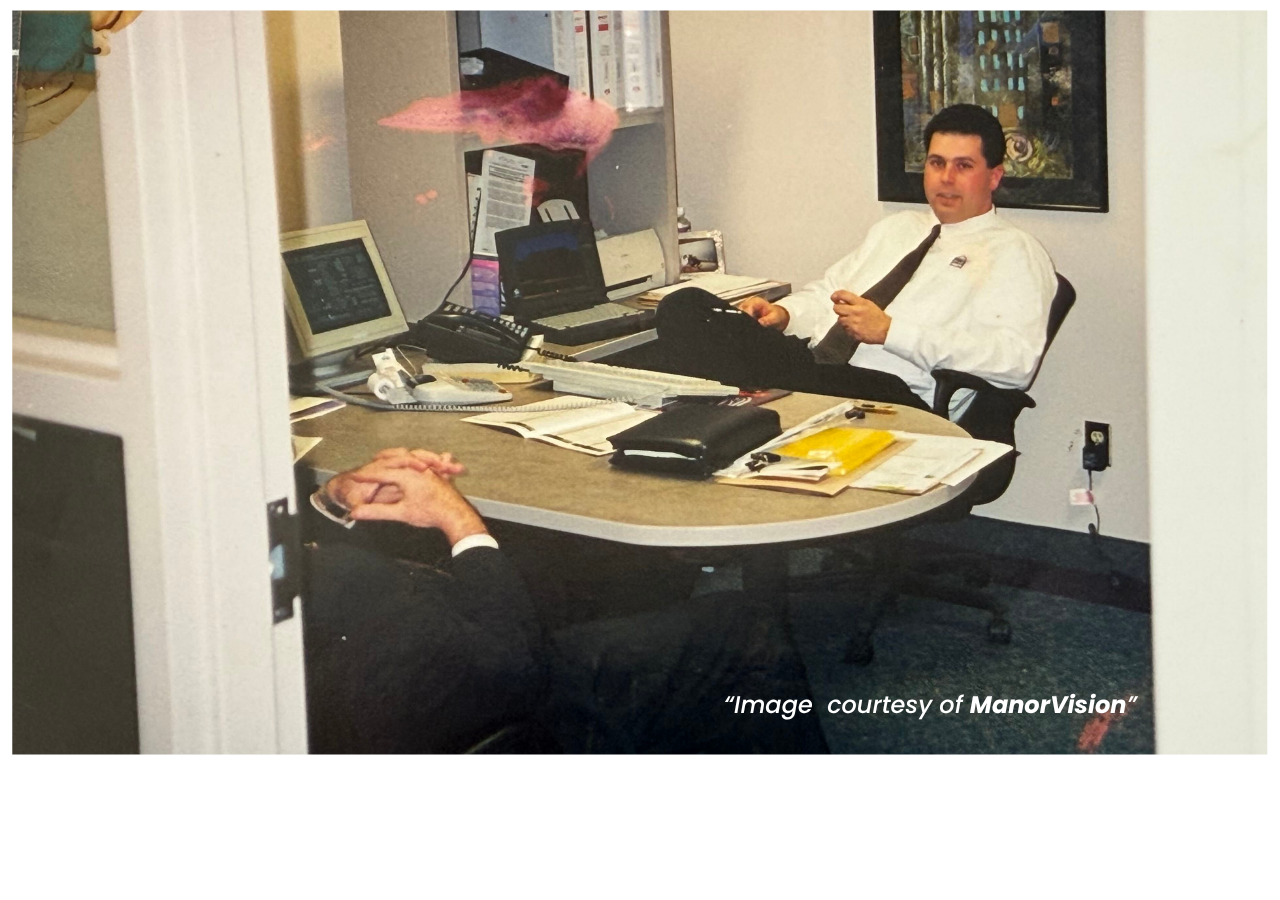
I’ve been in the car business for more than 30 years.
Long enough to live through a pile of technological shifts.
Some were bigger than others. Some happened quickly. Some took years.
But each registered somewhere on the Richter scale of automotive.
And looking backward, something interesting happened with almost every one of them.
We could see the ground moving long before we knew what the new landscape would look like.
When I started, used-car inventory was managed in a giant brown book.
I mean an actual fucking book.
Every car had a handwritten card. Repair order? Write it on the card. Expense? Write it on the card. Want to know what you owned and what you had in it?
Go to the manager’s office and open the book.
New cars weren’t much more sophisticated.
Vehicle invoices arrived at the dealership. Someone would photocopy them for however many managers needed a copy, walk around the store and put them into big binders in each office.
Car sold?
Pull the invoice.
Something got charged to the car?
Go find all the copies and update them.
Manually.
Then DMS systems started showing up.
And there was resistance.
Lots of it.
The brown book worked.
That’s important.
The people resisting weren’t necessarily idiots. Many of them were extremely good operators who had spent years becoming proficient with a system that worked.
They just couldn’t see exactly where the replacement was going.
Neither could I.
Then came CRMs.
Same story.
Then F&I software.
I remember hand bombing contracts, bills of sale, warranty documents, bank packages. Miss something, screw up a stip, forget an initial and the bank could kick the package back.
Do it again.
Track down the customer.
Get another signature.
Then more of that became structured and automated.
Then online marketplaces.
VDPs.
Vehicle-history reports.
Market pricing software.
Simulcast auctions.
On and on.
Every one changed something.
Inventory escaped the brown book.
Customer information escaped the salesperson’s head.
Deal documentation escaped the typewriter and handwritten deal jacket.
Vehicle history escaped the local information advantage.
Inventory escaped the physical dealership.
Wholesale eventually escaped the physical auction lane.
Information kept escaping its container.
We never knew exactly where any of those fuckers were going.
But the general direction was usually pretty clear.
And I think that’s the part I’ve been missing in how I’ve thought about AI.
I’ve been trying to see too far down the road.
Which model wins?
What happens to Google?
What happens to websites?
How important will schema become?
Will people optimize for ChatGPT the way they optimized for Google?
Will AI agents start doing the searching?
Will they eventually do the buying?
What happens to social platforms and all their walled-off data?
I have opinions on all of it.
But I don’t need to be right about any particular one.
Because I can already see the ground moving.
The cost of finding information is collapsing.
So is the cost of retrieving it.
Comparing it.
Cross-referencing it.
Synthesizing it.
And increasingly, doing something with it.
That applies whether you sell cars, run a company, practice law, manage money, build houses, advise businesses or perform heart surgery.
The mechanics cross over.
For years, when somebody wanted to know whether you were any good, they might ask someone they trusted.
Then they might Google you.
Then maybe check LinkedIn.
Read your website.
Look at some reviews.
Today they can already ask an AI system to begin doing some of that work for them.
Tomorrow?
I don't know.
And increasingly, I don’t care.
Because I think there’s a more useful question:
What does is have to work?.
For a while I thought the answer to all of this was increasingly sophisticated engineering.
Better websites.
- structured data.
- content.
- connections between evidence.
- machine legibility.
I still think all of those things may matter.
A lot.
But another question started bothering me.
What happens when everybody does everything right?
What happens when everybody has the beautiful website?
- has perfect schema.
- publishes constantly.
- has the AI chatbot.
- knows how to optimize their content.
- has access to the same incredibly capable tools.
AI is rapidly reducing the cost of competent execution.
Which means, eventually, competent execution becomes the ante.
It gets you into the game.
It stops being the reason you’re chosen.
So I’ve found myself moving upstream.
Before we ask how to engineer somebody’s representation, there’s a simpler question.
Representation of what?
What actually happened to you?
What did you learn?
What did you get wrong?
What changed your mind?
Where did your judgment come from?
Why do you make decisions differently today than you did 20 years ago?
What methods did you develop?
What do you believe that others in your field don’t?
Why?
What can be verified?
What do your customers, employees, partners and peers know about you that the internet doesn’t?
That’s the source.
And increasingly, I think the source is where the durable value lives.
Maybe my years in wholesale should have taught me this sooner.
A good wholesaler doesn’t eliminate uncertainty.
You rarely know exactly who is going to buy the car when you acquire it.
You manage the risk by cultivating the outs.
If this buyer doesn’t want it, who else might?
If this market moves, where else can it go?
What’s my basis?
What options am I preserving?
You don’t mitigate uncertainty by correctly predicting the future.
You mitigate it by preserving enough viable outcomes that you don’t need to.
And that’s how I’ve started thinking about AI.
I don’t need to know which platform wins.
I don’t need to know exactly how discovery works five years from now.
I don’t need to know whether somebody finds you through Google, ChatGPT, LinkedIn, an AI agent, your website or something that hasn’t been invented yet.
You don’t control which platforms win.
You do control what they have to work with.
That realization is also why I’ve spent so much time recently rebuilding something we created called The Polaris Method.
Not because I suddenly think everybody needs a “personal brand.”
Quite the opposite.
I think a lot of accomplished people already possess the valuable part.
Twenty-five or thirty years of experience.
Judgment.
Relationships.
Mistakes.
Methods.
Beliefs.
Stories.
Evidence.
Perspective.
They just never bottled it.
They were busy doing the thing.
Polaris starts there.
Before the website.
- the content strategy.
- the schema.
- trying to optimize anything for machines.
Capture the source.
Understand it.
Structure it.
Preserve it.
Then decide what deserves to be done with it.
AI changed the urgency. It didn’t create the asset.
So yes.
I’ve changed my mind about what comes next.
I’m less interested in predicting the exact destination.
I’m much more interested in understanding which mechanics remain useful across a whole bunch of possible destinations.
Capture the source.
Make it legible.
Preserve the evidence.
Own what you can.
Cultivate the outs.
Then let the future tell us which ones matter.
Because if there’s one thing 30 years of watching technology reshape an industry has taught me, it’s this:
You don’t need to know what the dealership of 2026 looks like when you’re standing beside a giant brown inventory book in 1994.
You just need to recognize that the fucking book probably isn’t the final form.
Bob

About Bob Manor
Bob Manor is the founder of South Ontario Auto Remarketing , Can-Am Dealer Services , and co-founder of Auto Auction Review . He’s also the creator of Influence.vin , a branding and communication studio built for the car business. With over 30 years in the automotive world, Bob specializes in wholesale, dealer services, and identity-driven brand strategy. He’s a regular contributor to well-known automotive publications and uses his platforms to help industry pros re-align with who they are, not just what they do
Disclaimer:
These are my own observations and interpretations, based on lived experience inside this industry.
This is not financial, legal, or professional advice ... it is pattern recognition, shared for awareness and strategic consideration only