
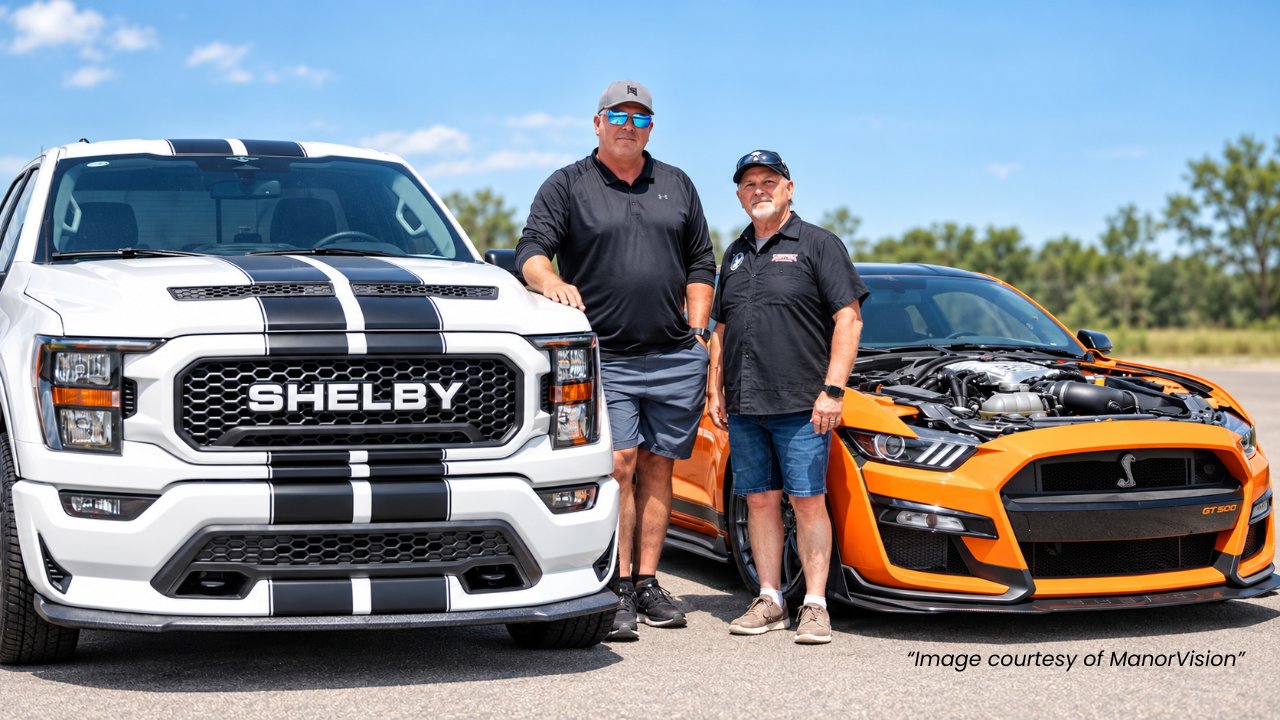
Well, here we are. Number 50.
Fifty editions of me sharing observations, stories, occasional predictions, and whatever else has been rattling around in my head.
To those of you who've been reading along, whether from the beginning or just recently, thank you. I genuinely appreciate the time you give me every week.
For this one, I thought I'd write about the people who made me love this crazy business in the first place.
All My Heroes Are Car Guys.
Well, a lot of them anyway.
I've spent most of my adult life around car people. Dealerships, auctions, manufacturers, finance companies, suppliers. Different countries, different cultures, different accents.
One thing I saw and can’t unsee?
You can change the geography, the franchise, the compensation plans, even the language being spoken.
The characters are remarkably familiar.
The car business might be the world's largest Island of Misfit Toys.
Former athletes. College dropouts. Immigrants. Entrepreneurs who haven't figured out they're entrepreneurs yet. People who walked onto a car lot looking for a summer job and stayed forty years.
Individualists. Nonconformists. Some spectacularly rough around the edges.
Every dealership I've ever known could have been its own episode of The Office.
Frankly, some of the real stories would never make it past the writers' room. Nobody would believe them.
Al Gold and the lunch committee
Back in the 90s, I worked in a dealership with an older used-car salesman named Al Gold.
Al was an old-school character. Clever. Wily. Funny. He had absolutely no ambition to become a sales manager, general manager, or anything else.
He wanted to sell cars.
And he was consistently number one.
There were five other salesmen in his building. All of them watched the lot like hawks, waiting for the next customer to drive in.
Every day around lunchtime, the boys had a ritual.
They'd decide what to order, debate the local restaurants, sort out who was going to pick it up. A remarkably elaborate production considering the objective was usually a sandwich.
Al was the ringleader.
One afternoon, I happened to be in the building when a nice-looking car pulled into the lot.
Al spotted it.
He stood up, opened his desk drawer, and announced, "Okay boys, what's on the menu today?"
Out came the takeout menus, coupons, and whatever else he'd collected from every restaurant in the neighbourhood.
The other five guys immediately descended on his desk.
Everyone had an opinion. Everyone wanted something different.
Meanwhile, Al quietly slipped out the door.
And wouldn't you know it, he just happened to stumble upon the customer who'd pulled into the lot.
I laughed my ass off.
The next day, I made a point of being around at lunchtime.
Same performance.
A few days later I said, "I see what you're doing there, Alan. Smooth."
He winked.
"Keep it between us, kid."
And I did.
As far as I know, the other guys never figured it out.
Months later, I was waiting for Herb Singer, the president of Discount Car Rental Canada, to arrive with his assistant, Joanne.
Herb came in and asked me to take him over to see Al Gold.
I was floored.
They were old friends. Obvious affection. History.
Al had never mentioned it. Never used the relationship to impress anyone.
I would eventually learn he'd accumulated considerable wealth and was remarkably well connected.
But he was perfectly happy selling used cars and hanging around with the boys.
He'd figured out what he wanted from life.
And he didn't need another title to validate it.
I've known a lot of Al Golds.
Not people exactly like him. That's the beauty of it.
Characters. Every last one of them.
The education nobody talks about
People outside the business sometimes refer to car salespeople as order takers.
Some are.
But the exceptional ones I've known were rarely anybody's idea of a good order taker.
Think about the sheer number of human interactions inside a dealership.
Customers. Coworkers. Managers. Lenders. Suppliers.
Everyone bringing their own expectations, ambitions, insecurities, and whatever happened at home that morning through the door.
An endless collision of nervous systems.
And somehow, everyone has to figure out how to navigate it.
Every industry has its dysfunction.
The car business just gives you dozens of repetitions a day.
Over years, that becomes an extraordinary education in people.
Some learn to manipulate. Al certainly knew a trick or two.
A lot never learn much of anything.
But others develop an almost instinctive understanding of the person sitting across from them.
The customer comes in asking about a car. The great salesperson eventually learns that the car is often the least interesting part of the conversation.
I was told something early in my career that stuck with me.
When you sell someone a car, you're entering a family. An ecosystem.
That one sale might lead to dozens more over the years.
But only if you've earned the right to remain in their world.
And that takes something more than closing ability.
It takes empathy. Sometimes a little restraint. An understanding that the immediate reward isn't always the best reward.
The smartest people I've known in this business eventually figured out that the relationship was worth more than the transaction.
And some of them built remarkable lives on that understanding.
The ones who stay. And the ones who leave.
A lot of exceptional car people never wanted to do anything else.
Al was one.
Others became managers, dealer principals, group owners, finance executives, vendors, or entrepreneurs in completely unrelated industries.
Jim Pattison started selling used cars. Ended up a decabillionaire
Ever heard of Rick Hendrick?
I wonder how many people who knew them in the beginning imagined where they'd eventually end up.
There's a wrinkle.
The qualities that make someone exceptional in this business don't always make them particularly easy to manage.
Some of the strongest people I've known were fiercely independent. They questioned things. Challenged decisions. Had their own ideas about how something should be done.
They could be a tremendous pain in the ass.
I know. I've been one.
And sometimes the business didn't know what to do with them.
A compensation program changed. A new manager arrived. Somebody upstairs decided to fix something that wasn't broken.
And somebody with an extraordinary understanding of people walked out the door.
Sometimes the employee was the problem. Let's not pretend otherwise.
But I've often wondered how many exceptional people might have spent an entire career in a dealership if they'd found the right environment.
Because many of the ones who left didn't stop loving the car business.
They just took what they'd learned somewhere else.
What I see now
I've met a lot of people over the years.
Some with impressive titles. Remarkable credentials. Serious money.
And I've met people sitting behind battered desks in used-car buildings who understood human behaviour better than almost anyone I've encountered since.
That's what I keep coming back to.
People.
We spend so much time in this industry measuring performance, studying processes, chasing targets, and arguing about whatever the latest problem happens to be.
Meanwhile, we're surrounded by human beings whose histories, abilities, ambitions, and peculiarities we barely understand.
The fellow who's been selling cars beside you for twenty years might be one of the most interesting people you'll ever meet.
Or he might be a complete lunatic.
Probably a little of both.
But how much do you really know about him?
What made him that way? What does he care about? What has he learned? What is he capable of that nobody's ever bothered to discover?
And what might happen if you took the same curiosity you use to understand a customer and applied it to everyone else in the building?
I think we sometimes forget that the people we encounter every day have entire lives happening beyond the little piece we get to see.
Al Gold certainly did.
And I was fortunate enough to catch a glimpse.
I've met plenty of important people in my life.
But a lot of the people who taught me the most about being human were car guys.
I wonder how many more I walked past without noticing.
Thanks for reading.
Bob
P.S. One more thing.
If you've been reading my stuff for a while, you've probably figured out that I've spent an awful lot of time trying to understand the people in and around this business.
Lately, I've been working on something that brings a lot of those observations together. And I think it has some pretty interesting implications for people who've built their careers here.
If you're curious, I'd be happy to walk you through it personally.
Just reply to this email with “What's for lunch, boys?”
I'll know you read this far. And we'll find a time to talk.

About Bob Manor
Bob Manor is an entrepreneur, writer, and founder of Influence.VIN, where he develops Recognition Engineering strategies that help established professionals, executives, and businesses make their real-world expertise discoverable, understandable, and verifiable in an AI-mediated world.
With 36 years of experience in the automotive industry, Manor has built and operated businesses spanning automotive remarketing, dealer services, technology, and media. His work draws on decades of firsthand experience with entrepreneurship, reputation, human behaviour, and the economics of trust.
He publishes Manorisms, exploring business, technology, identity, and the often-overlooked connections between them.
Disclaimer:
These are my own observations and interpretations, based on lived experience inside this industry.
This is not financial, legal, or professional advice ... it is pattern recognition, shared for awareness and strategic consideration only

Responses